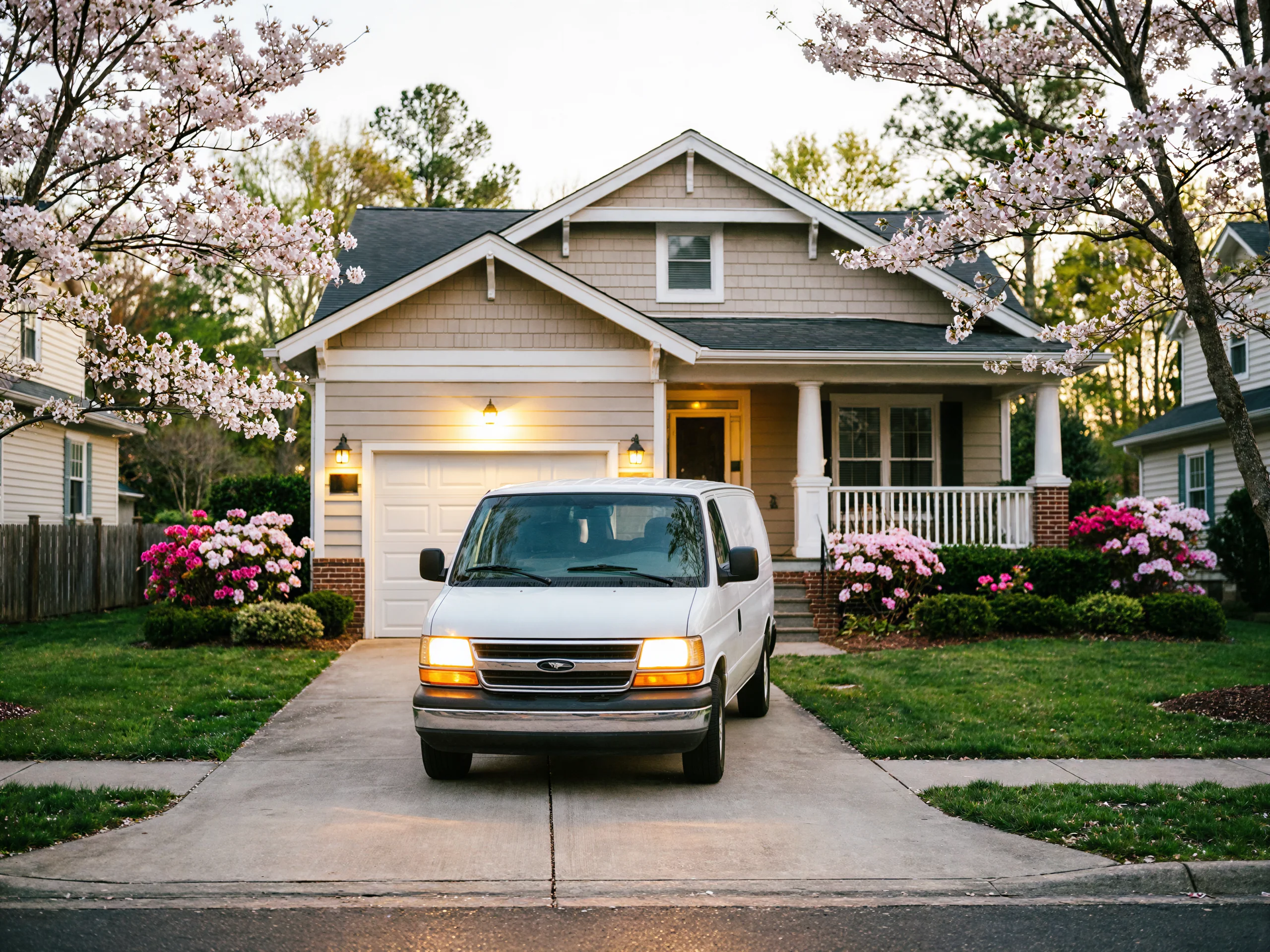
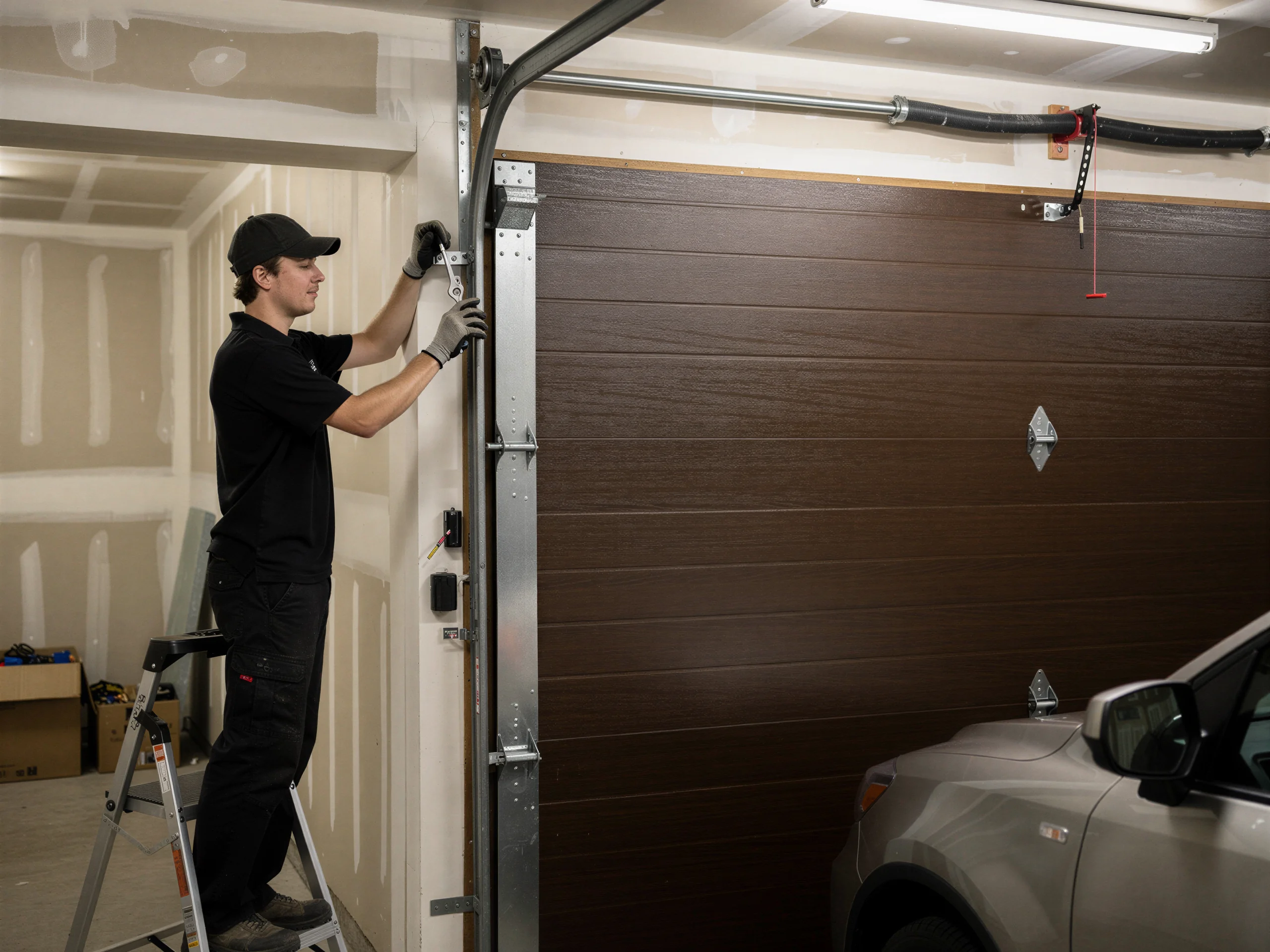
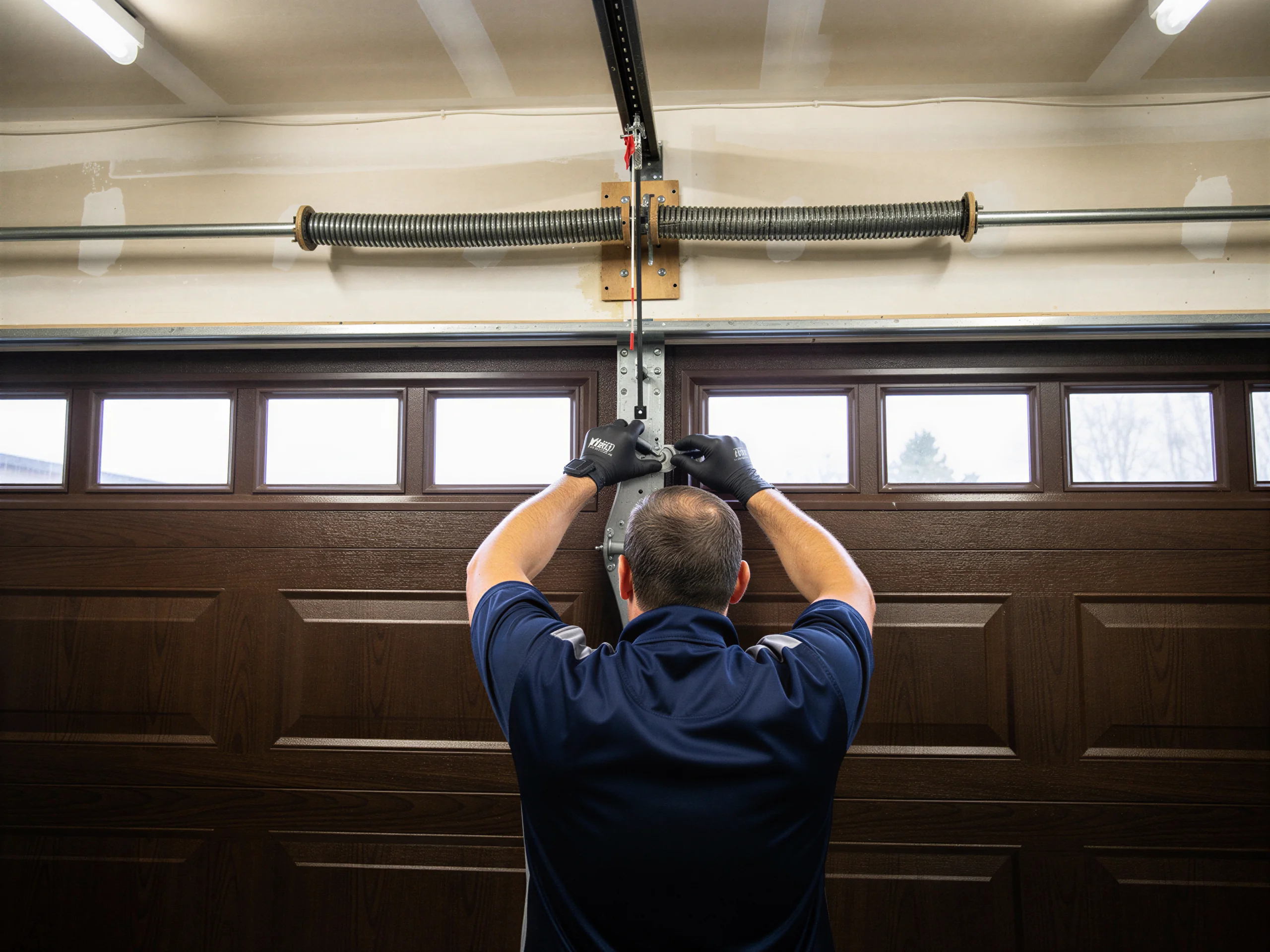
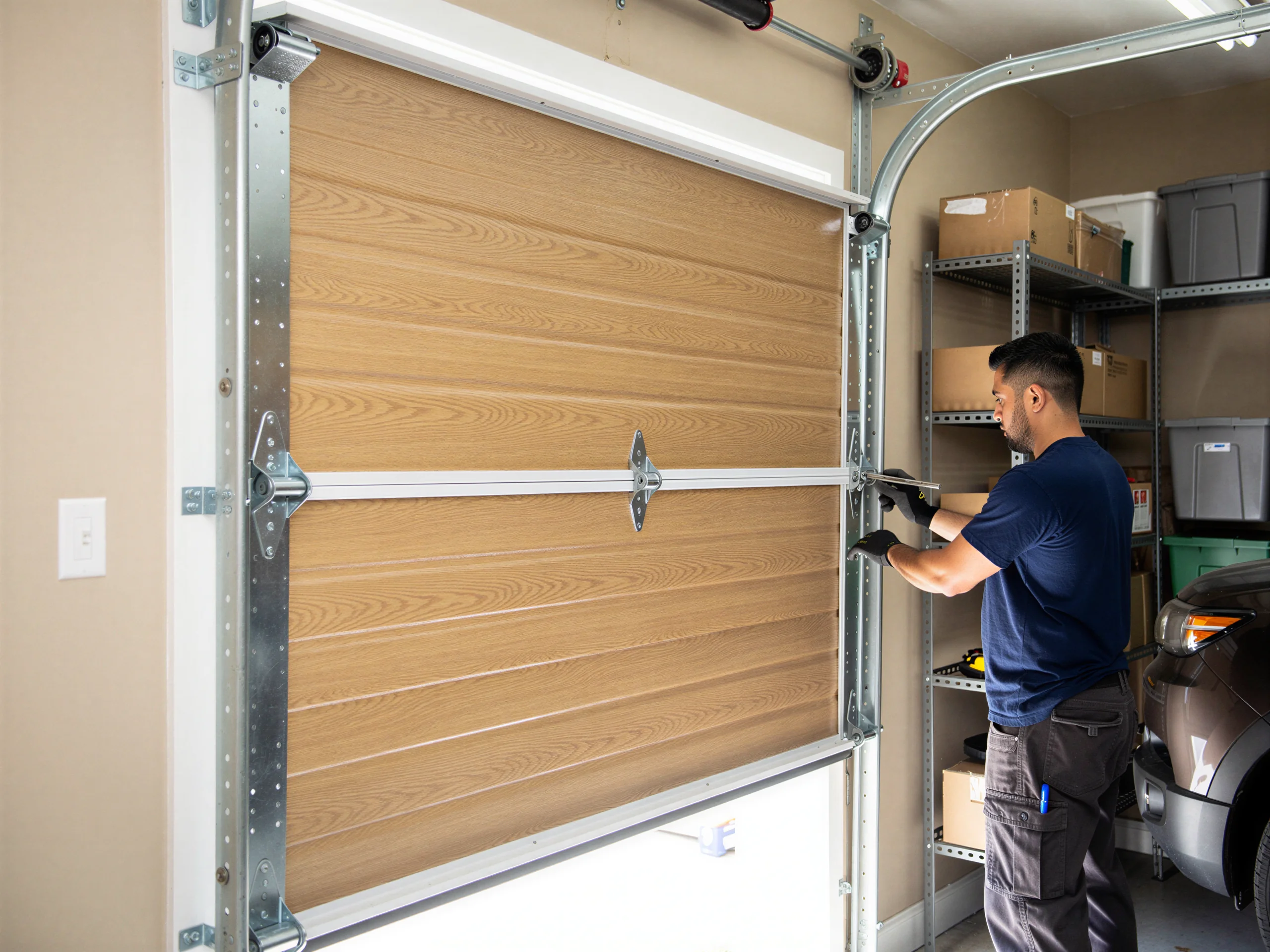
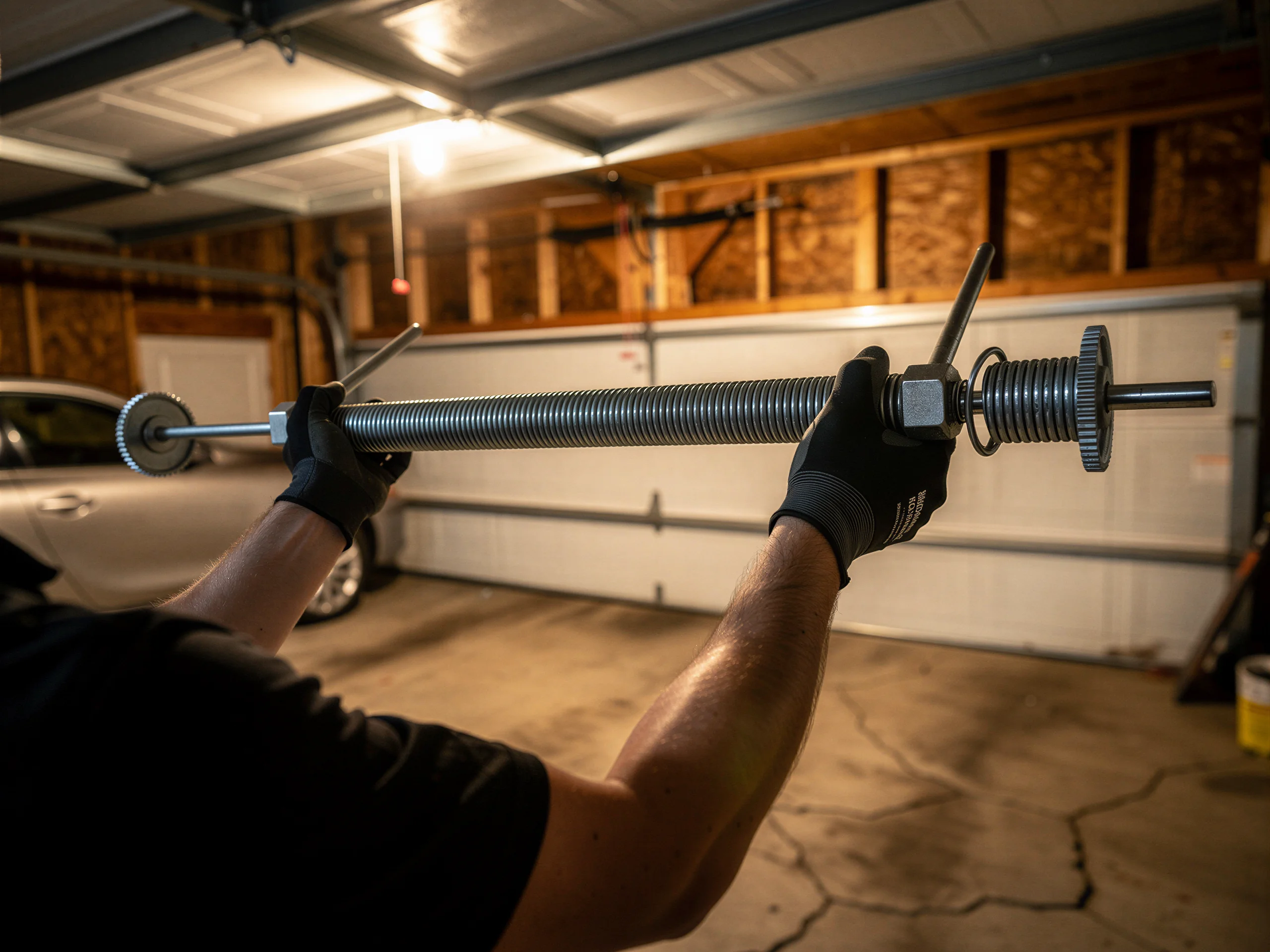
Houses in this service area span 1938 to 2007, with the median build year landing around 1976. That one number explains most of the emergency calls we get. A torsion spring is rated for a set number of open-close cycles, usually somewhere around 10,000, and a door installed in the mid-1970s has been through more of those cycles than most owners realize. Springs don't warn you. They let go on a Tuesday night with no notice, usually when the temperature swings hard.
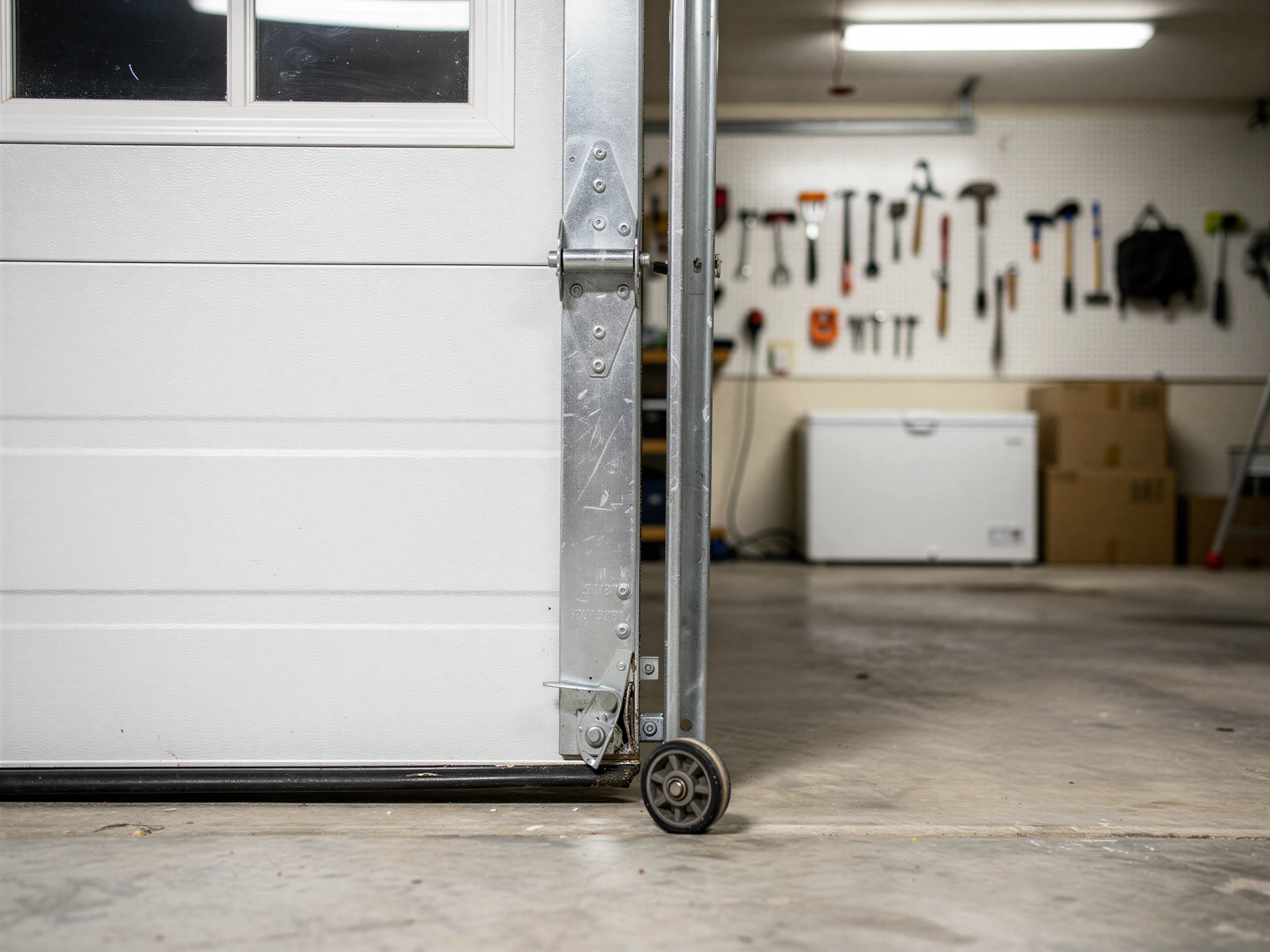
That's the other half of it. This area sits in a cold-moderate climate band, which means steel hardware goes through real freeze-thaw cycling every winter, not constant cold and not constant mild. Torsion springs and extension cables contract in a cold snap, and if the steel already has fatigue from forty-plus years of cycling, that contraction is often the final stress that snaps it. The 17 named communities that make up this service area share that same housing-age mix and the same climate exposure, which is why the failure pattern looks the same whether you're near Locust Grove or out toward Jackson.
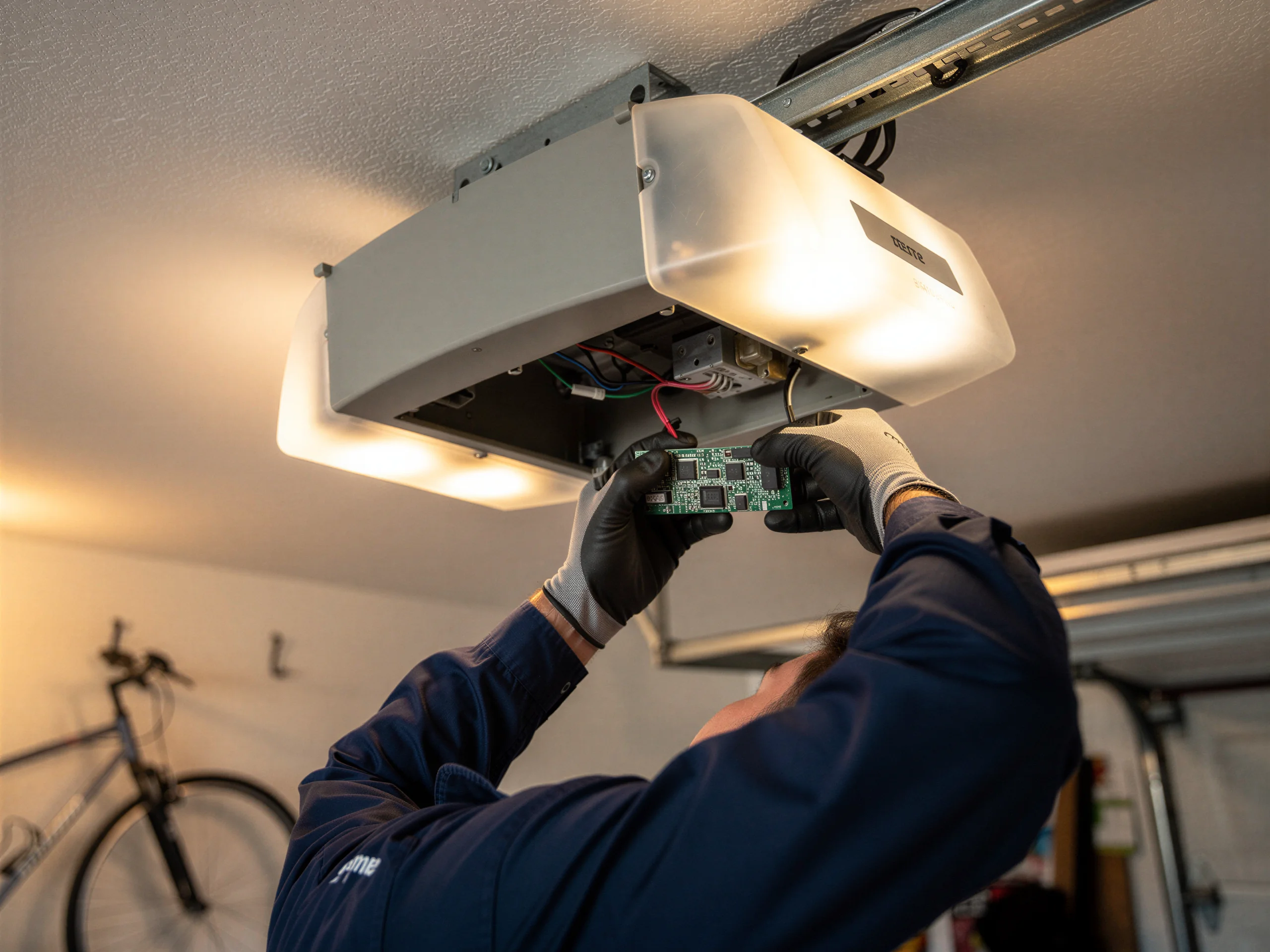
Newer builds aren't exempt, just less common here. A door from 2005 fails for different reasons, usually a cheaper stock opener or a track that was never shimmed level at install.