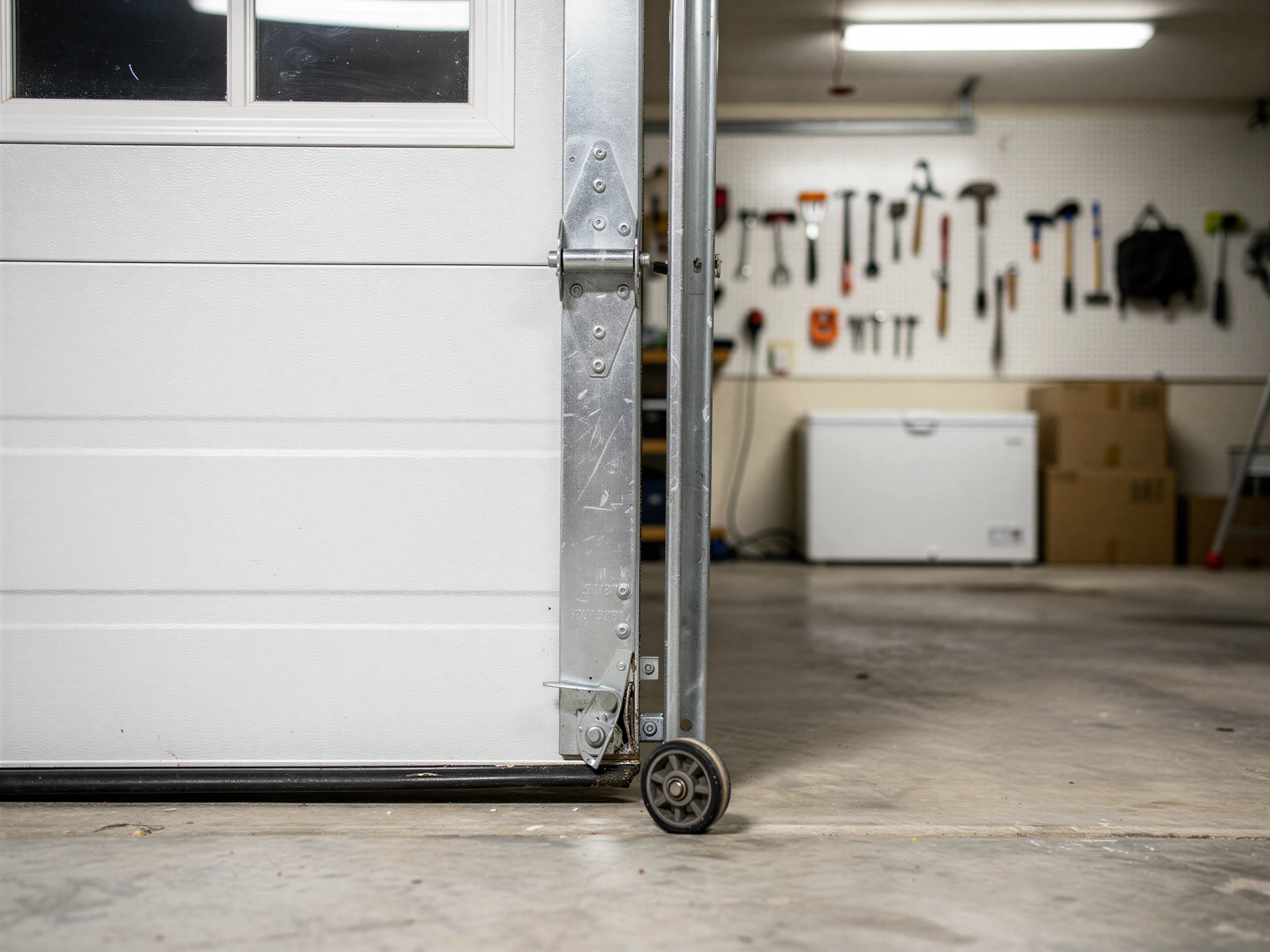
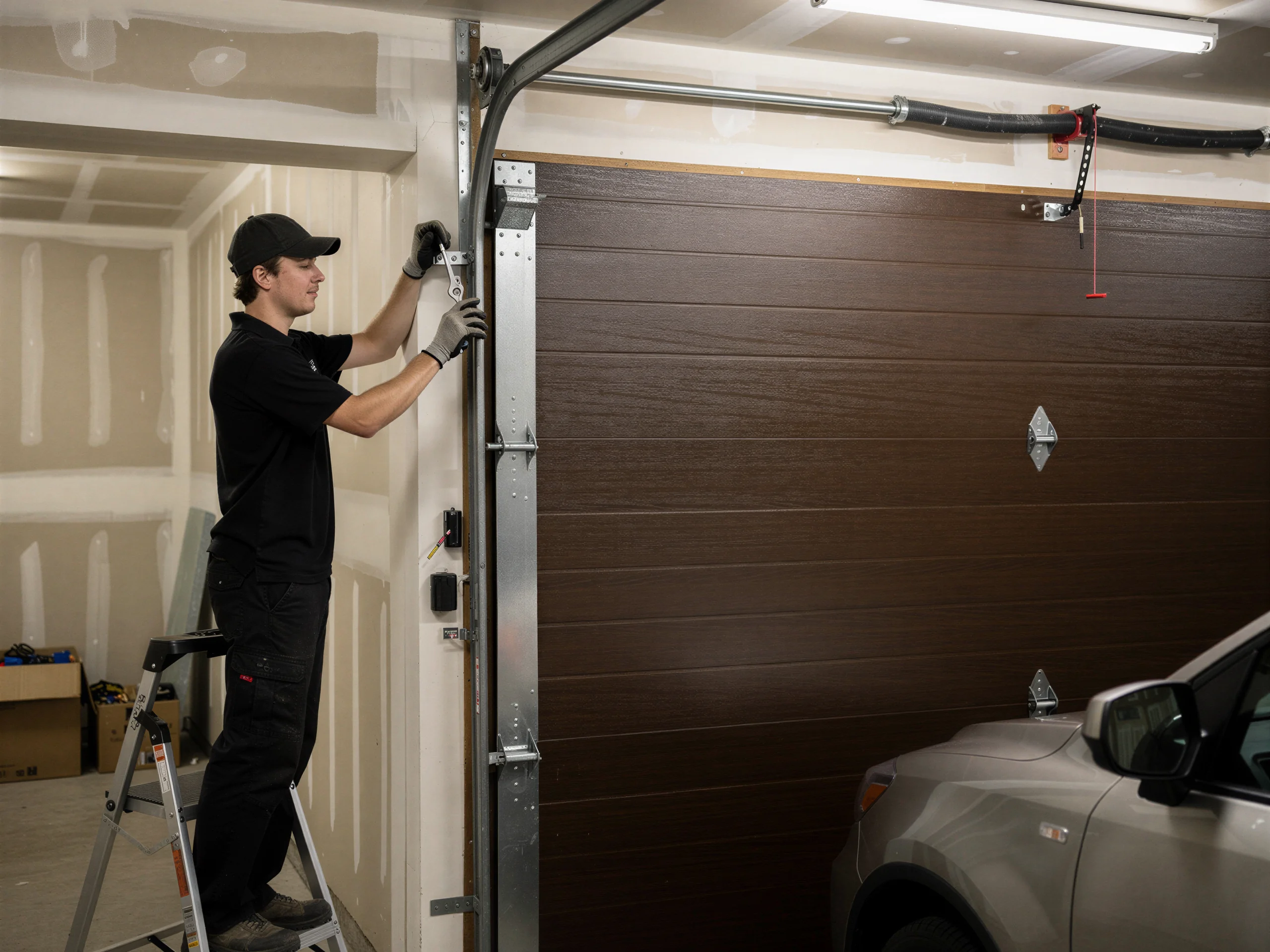
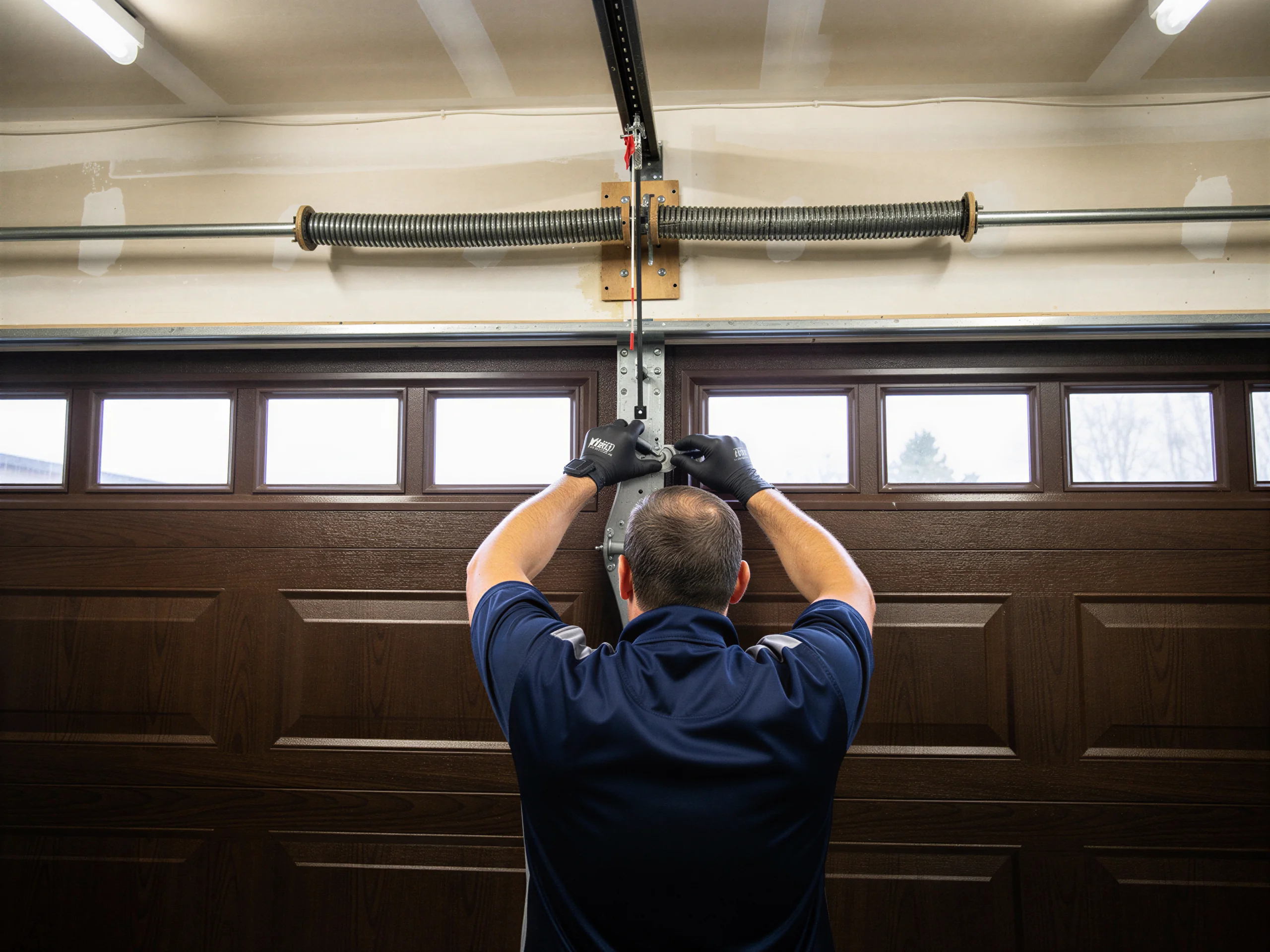
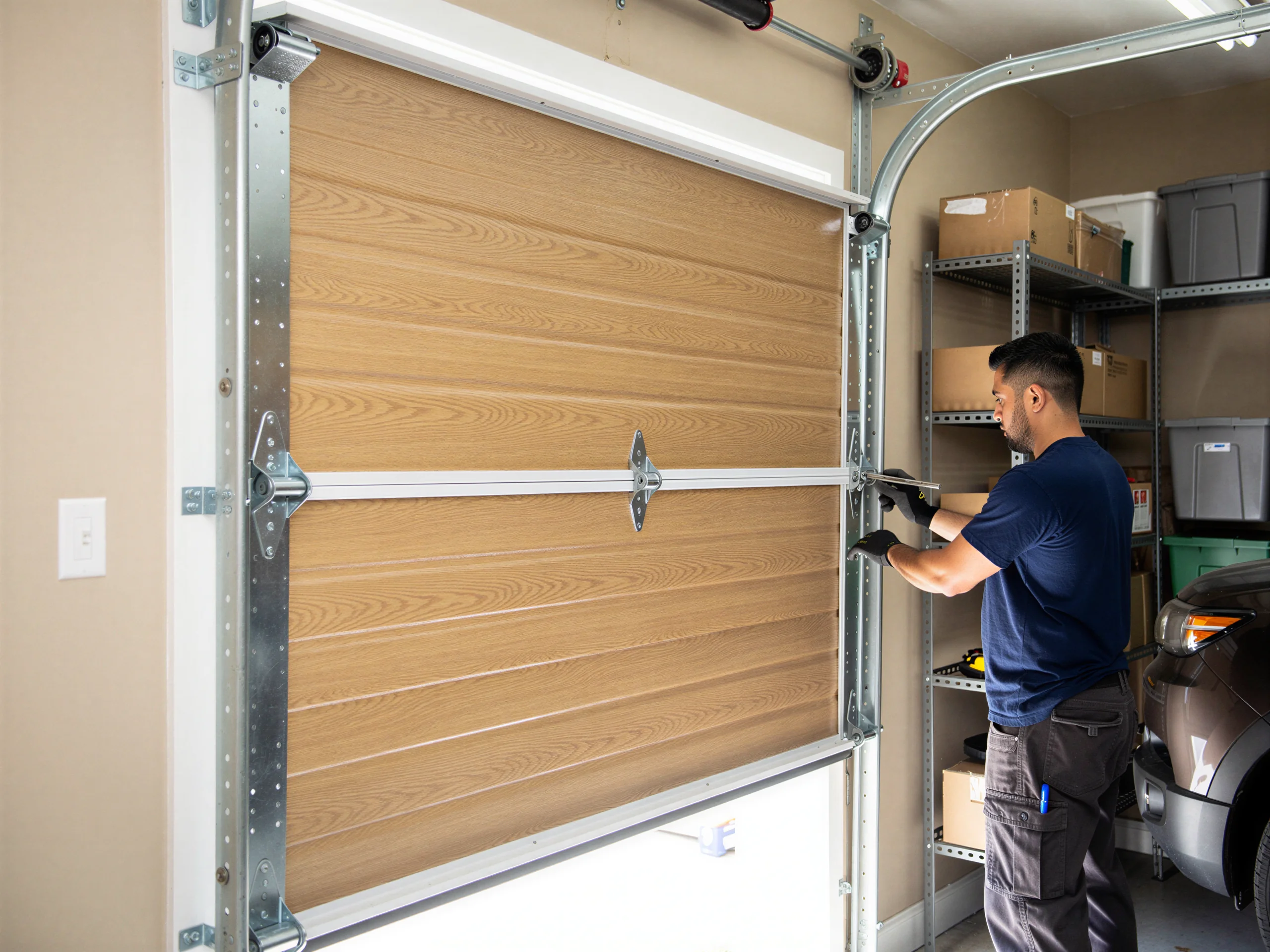
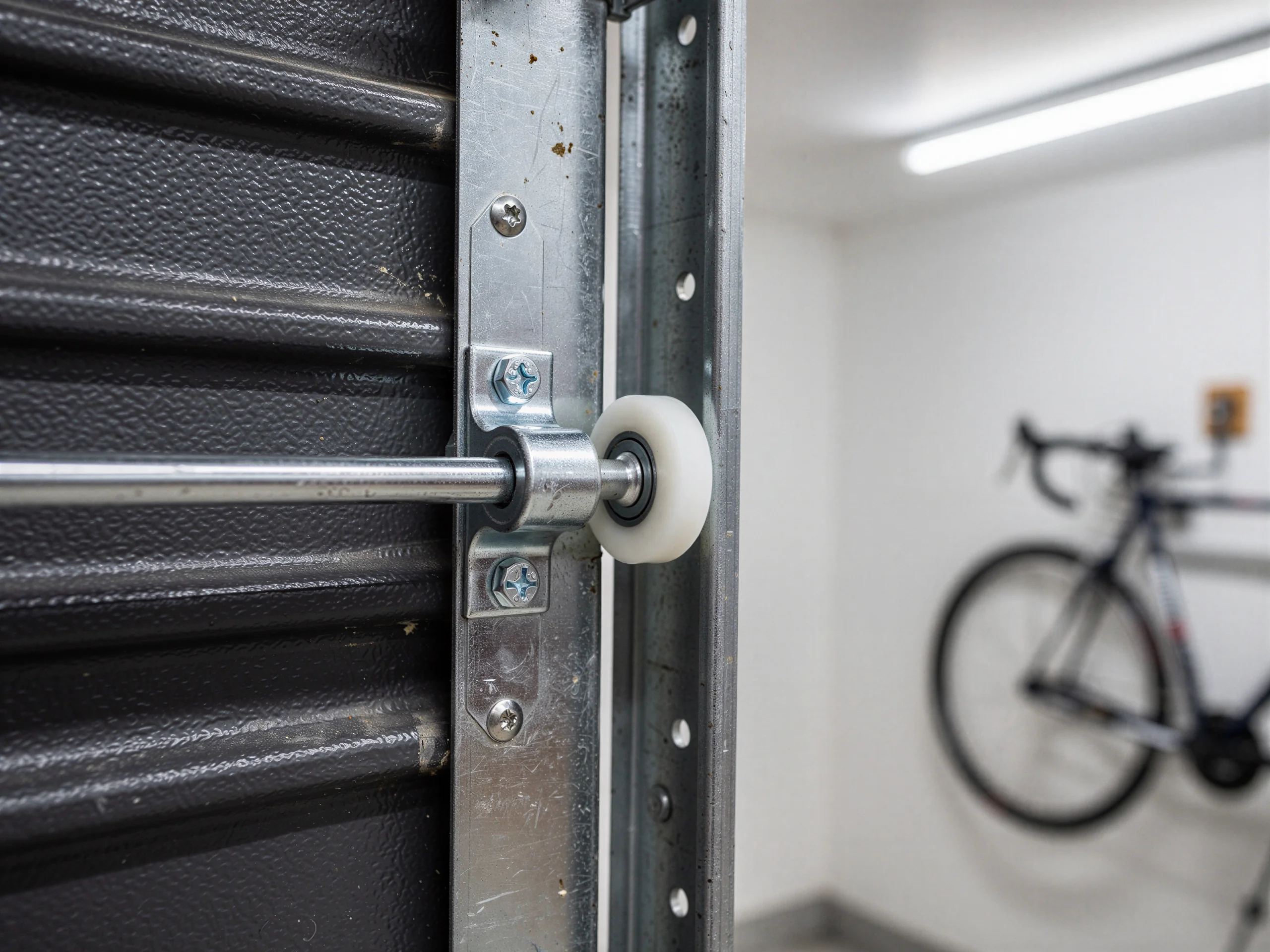
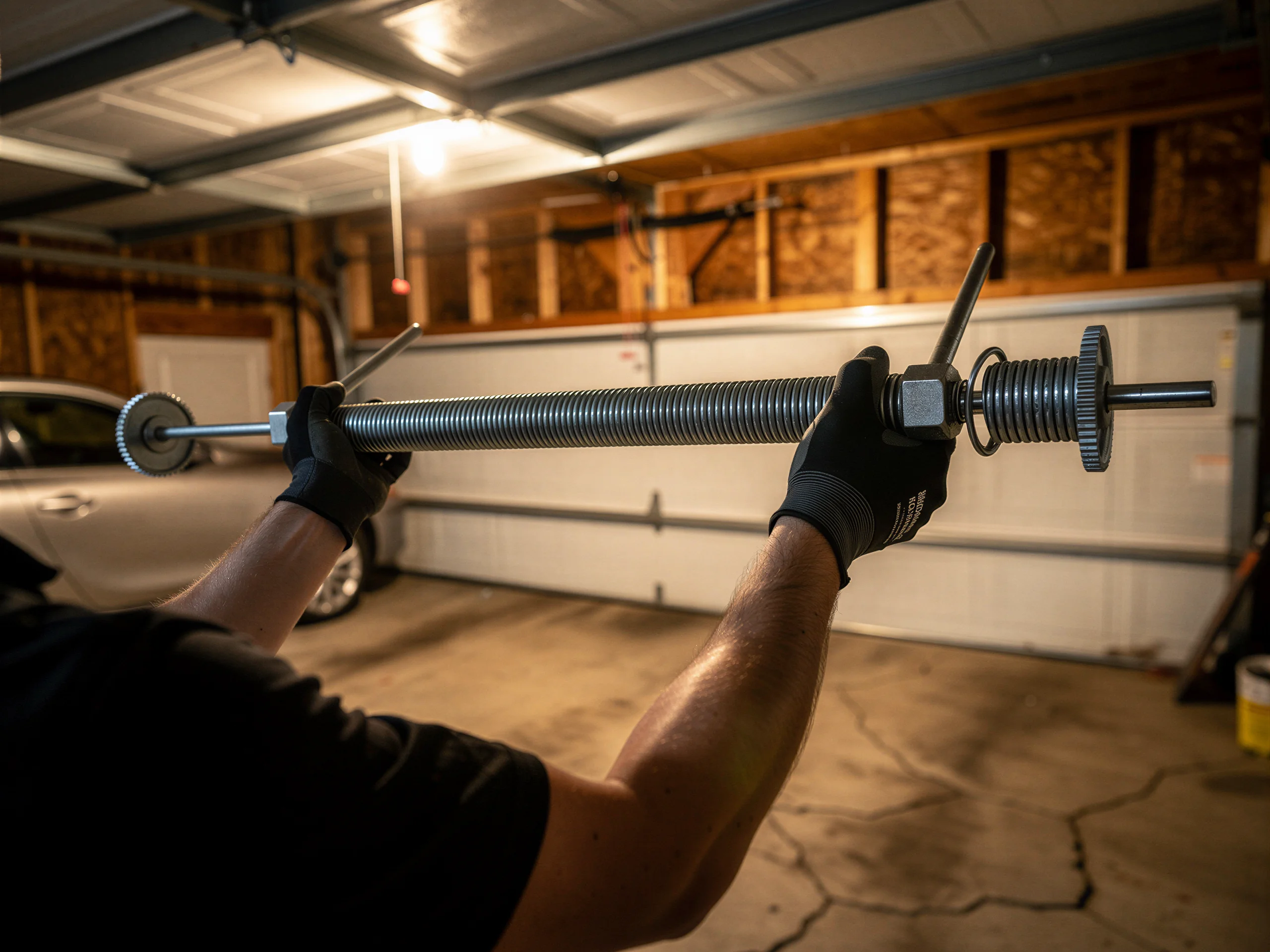
Houses built around 2004 in Locust Grove mostly came with factory-standard torsion spring setups and short-radius track - builder-grade hardware sized for a lighter door, not the heavier insulated models some owners have since swapped in. That mismatch is the thing that bites: a heavier replacement door on the original light-duty track and rollers puts more side-load on the rail than it was sized for, and over a few years that shows up as a track that's worked loose at the wall brackets, or rollers that walk out of the channel instead of riding it.
The cold-moderate climate band this area sits in doesn't bring the hard freeze-thaw cycling that cracks concrete aprons or seizes hardware the way a true cold-winter region would, so track failures here are rarely a weather story. They're a load story - the wrong door weight on the original rail, or a rail that's taken a hit and never gotten pulled back true. Either way, the door comes off track at the same weak point: where the bottom roller meets the curve into vertical track, right where a bent section or a loose bracket gives it room to jump the rail.
We see this pattern often enough on newer-stock Locust Grove houses that it's worth checking the track-to-bracket fit before assuming it's just a bad roller.